Wizard of A-Learning
Introduction
In a world where traditional education often fails to foster true intellectual autonomy, A-Learning™ (Adult Learning) emerges as a transformative paradigm, empowering individuals to harness their innate curiosity and navigate the complexities of lifelong learning. Rooted in autodidacticism and enhanced by AI technology, A-Learning introduces CEIRA™ (/ˈseɪ.rə/, SAY-rə), the Five-Stage Common Sense Learning Autonomy Cycle: Curiosity, Exploration, Interactions, Reflection, and Application. This framework, inspired by Cuijpers’ (2006) InterActLearning™ axiom that “Learning happens in the dynamical space of our mutual ignorance,” encourages learners to acknowledge their gaps in knowledge as a starting point for collaborative discovery, aligning with Delors’ (1996).
See the full version on your computer.
” Learning happens in the dynamical space of our mutual ignorance.”
– Peter Cuijpers –
A-Learning addresses the paradox of why extensive knowledge about learning does not always translate into wise action, a challenge often perpetuated by positivistic teaching’s focus on standardized outcomes over holistic growth (Jarvis, 2006). By embracing CEIRA™, you can become a wizard of A-Learning, a learner who conjures expertise through curiosity, collaboration, and reflective practice. This article guides you through practical steps to master each stage of CEIRA™, using real-world strategies and AI tools to unlock your potential. Whether you’re a professional seeking to up-skill, an educator fostering inclusive learning, or a lifelong learner navigating a rapidly changing world, A-Learning offers a path to intellectual freedom and ethical action. Let’s embark on this journey to transform your learning experience and contribute to a wiser, more connected society.

2006 © Cuijpers (4B-Model)
Step 1: Curiosity
Spark Your Curiosity
The journey to becoming a wizard of A-Learning™ begins with Curiosity, the first stage of CEIRA™. Curiosity is the spark that ignites self-directed learning, driven by intrinsic motivation and an acknowledgment of your ignorance, as Cuijpers (2006) suggests. To cultivate this stage, start by identifying a topic that intrigues you—perhaps a skill like data analysis or a concept like quantum mechanics.
Practical steps include setting aside time each day to explore questions that pique your interest. Use tools like books or AI to generate prompts or curate resources that challenge your assumptions. Keep a journal to document your curiosities, noting what you don’t know and why it matters to you. This act of acknowledgment opens the door to the “dynamical space of mutual ignorance,” where learning thrives through humility and inquiry (Cuijpers, 2006).
Curiosity also involves embracing a growth mindset, recognizing that ignorance is not a limitation but an opportunity for discovery (Dweck, 2006). By starting with what you don’t know, you create a foundation for meaningful exploration, setting the stage for the next steps in the CEIRA™ cycle.
Curiosity
Is your
Spark
Step 2: Exploration
Embark on Exploration
With curiosity ignited, move to Exploration, the second stage of CEIRA™. This stage involves seeking diverse resources to deepen your understanding, leveraging both traditional and modern technological tools. Exploration is about venturing into the unknown, gathering knowledge from books, podcasts, online courses, or real-world observations.
Use technological to curate interdisciplinary sources, such as articles, videos, or summaries, to broaden your perspective. For instance, if exploring data analysis, ask AI for resources on statistical methods, case studies, or beginner tutorials. Complement this with traditional methods like visiting a library or enrolling in an online course. The goal is to reduce cognitive load while maximizing discovery, ensuring accessibility regardless of your background (Sweller, 1988).
Exploration requires an open mind—be willing to encounter ideas that challenge your initial assumptions. Document your findings in your journal, noting key insights and questions that arise. This stage prepares you to enter the collaborative space of mutual ignorance, where interactions with others will refine your understanding (Cuijpers, 2006).
Explore
Boldly
Step 3: Interactions
Engage in Interactions
The third stage, Interactions, brings your learning into a social context, fostering collaborative dialogue within the “dynamical space of mutual ignorance” (Cuijpers, 2006). This stage emphasizes the power of community in knowledge creation (Delors, 1996; Wenger, 1998).
Join or create learning networks, such as online forums, study groups, or community hubs, where you can share your explorations and learn from others. Acknowledge your ignorance openly, as this vulnerability invites others to contribute their insights, enriching the collective understanding. (Cuijpers, 2006). Use social media platforms to facilitate discussions and to integrate other perspectives.
For example, if learning about quantum mechanics, engage with educators in a hub to discuss strategies, reflecting on their experiences while sharing your own. This stage is about refining your knowledge through social interaction, preparing you for deeper reflection and practical application.
Interact
openly
Step 4: Reflection
Reflect Deeply
Reflection, the fourth stage of CEIRA™, is where you synthesize insights and develop wisdom, supporting learning to be (Delors, 1996). This stage involves metacognition—thinking about your learning process—and double-loop learning, questioning underlying assumptions to ensure ethical application (Flavell, 1979; Argyris, 1991).
Set aside time to review your journal, identifying patterns in your learning journey. Use Grok to cross-reference your findings with existing theories, ensuring your reflections are grounded in broader knowledge. Ask yourself: How has my understanding evolved? What ethical considerations arise from applying this knowledge? For instance, if exploring data analysis, reflect on how your skills can improve patient care without compromising privacy, addressing the ethical dimension of your learning (Jarvis, 2011).
Reflection transforms knowledge into wisdom, ensuring your actions are principled and contextually relevant, directly addressing the learning paradox of unwise behavior despite knowledge (Sternberg, 2000).
Reflect
deeply
Step 5: Applications
Apply Your Knowledge
The final stage, Application, brings your learning into the real world, aligning with learning to do (Delors, 1996). This stage involves using your knowledge to solve problems, create projects, or improve practices, ensuring practical impact. Choose a tangible goal, such as implementing a lesson plan or improving a professional process with data analysis. Consider the use of AI to refine your approach, analyzing potential outcomes or generating templates. For example, a nurse might apply data analysis to optimize patient care workflows, while a teacher might design inclusive classroom activities. Document the results in your journal, noting successes and areas for improvement (Kolb, 1984).
Application bridges the gap between knowledge and action, ensuring your learning translates into wise, ethical outcomes, overcoming the limitations of positivistic teaching (Argyris, 1991).
Apply
wisely
The Essence of A-Learning™
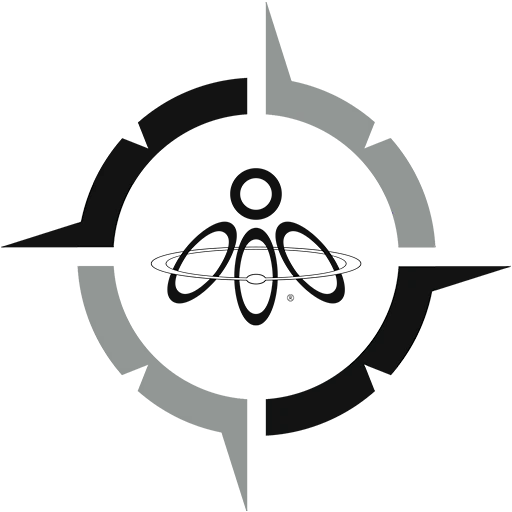
The CEIRA™ Learning Autonomy Circle represents a wheel of interconnected domains, each learning stage—depicted a door that symbolizes entry and exit points into the “dynamical space of mutual ignorance”, illustrating the non-linear, dynamic nature of learning. A circle, represent the dynamics between control and change, as well as internal and external forces. This abstract design captures the essence of A-Learning, where learners move freely between stages, collaboratively navigating the shared space of ignorance to conjure expertise (Cuijpers, 2006). The visual underscores the framework’s alignment with lifelong learning, inviting readers to engage with CEIRA™ as a transformative tool for intellectual autonomy and freedom.
On Becoming a Wizard
Becoming a wizard of A-Learning™ means mastering the CEIRA™ cycle, transforming curiosity into actionable wisdom through exploration, interaction, reflection, and application. This journey empowers you to overcome the learning paradox, ensuring knowledge translates into ethical, impactful action (Jarvis, 2006). By acknowledging your ignorance, as Cuijpers (2006) suggests, you enter a collaborative space where learning thrives, aligning with Delors’ (1996) vision of holistic education. A-Learning, enhanced by AI technology, offers a path to intellectual freedom, fostering a learning society where individuals contribute to societal well-being. Start today—Ignite your curiosity, explore boldly, interact openly, reflect deeply, and apply wisely. Your journey as a wizard of A-Learning awaits, promising a lifetime of growth and discovery. Contact us for more information.
5 Tips to Become an Wizard in Life Long Learning
Further Readings

The Power of Planning
The Lumora™️ Framework is a proprietary methodology for strategic planning, designed to facilitate visioning, goa...

Wizard of A-Learning
Learn how to become a wizard of A-Learning™ using the CEIRA™-cycle. Spark curiosity and claim your autonomy, Mast...

The Hype of AI
No algorithm steals a chef’s gut-hunch or a jazz riff. Unplug, dance, taste life—keep the spark alive. Partner wi...

Working with Masters
Boosting your Business by working with masters in Soft Systems Methodologies to skyrocketing your soft skills to the ...
Smart Choices
Make smart choices. Use our 12 tips Compass for personal goals, business strategies and organizational plans. Science...

Intelligence Declining?
Is Intelligence Declining? IQ scores are dropping, threatening our civilization. By 2100, a 15-point decline could fr...

Stressed Out
Uplifts your team’s mind, body, and spirit with Shendao. Unleash ancient power for modern results to transform stre...

Leading by Learning
Leading by Learning is a must for leaders in a world of disruptive change, learning fuels innovation. Embrace it to s...

Jamming with AI
Jamming with AI is the creative methodology of seeking, gathering and assimilating relevant information to keep a com...
Experts in People Skills
In the 21st century, soft skills like empathy and adaptability are vital for success. Research shows they boost emplo...

Is Luck Just Chance?
Luck hides in moments—a random chat lands a gig, a missed bus sparks a friendship. Research shows noticing small wi...

Exploring Relaxation
Explore the science, heritage, and practice of relaxation. Address the impact of stress across personal, professional...

The Origin Puzzle
Life’s origin is a cosmic puzzle. Abiogenesis faces challenges like RNA instability, yet progress in labs sparks ho...

What is Agogics
Learn more about the origin, concept, theories and methods of Agogics and the applications in modern human and organi...

Path of Virtuosity
Virtuosity isn’t a gift—it’s a sweaty, joyous path of effort. From Ziran’s grace to flow’s spark, exhaustio...

Evolution of Science
The evolution of science’s, from ancient history to modern genomics, unveils science’s dynamic evolution, a restl...

Qualities at Work
We transform teams into profit engines with a soft systems approach. We ignite qualities, drive revenue and innovatio...

Titans Toolkit
The Titans Toolkit shifts from static cases to real-time analysis. Using SSM, it equips leaders to innovate and navig...

Transcendental Realism
This preprint article introduces Transcendental Realism, redefining truth; as “a virtuous transcendence of perc...

Myth of the Teacher
The Myth of the Teacher flourishes selling the masses the idea that teaching guarantees leaning, But is that really t...
The Future of AI
Check out the trends of AI and how the progress of the technology will shape our future in the next decade and will c...

Shaping the Future
Shaping the Future isn’t just about planning—but its a solid method that fuses vision with action, intuition ...

Realms of Groups
Realms of Groups dives into the modern world necessitating new ways of thinking and working while developing 21st-cen...
Learning to lead
Learning to lead embodies a hybrid, human-centric framework that empowers professionals to attain mastery in agogics,...

Navigating Change
Navigating Change is a wild ride—tech’s nuts, markets flip fast. Plans flop 70%, but a consultant who gets dynami...
2025 © All Rights Reserved